SodaBoost Testing & Quality: What the Seals Mean and What Is Not Published
Quick answerThe SodaBoost label says Produced in a GMP Facility and Assembled in the USA. GMP refers to the FDA's supplement manufacturing rules, 21 CFR Part 111. The FDA does not approve supplements. A certificate of analysis reference exists, but no lab report has been published, so buyers can ask for identity, caffeine, heavy metal, microbial and hidden-drug results.
- 60-day satisfaction window
- Free US shipping on 3 or 6 bottles
How is SodaBoost quality checked?
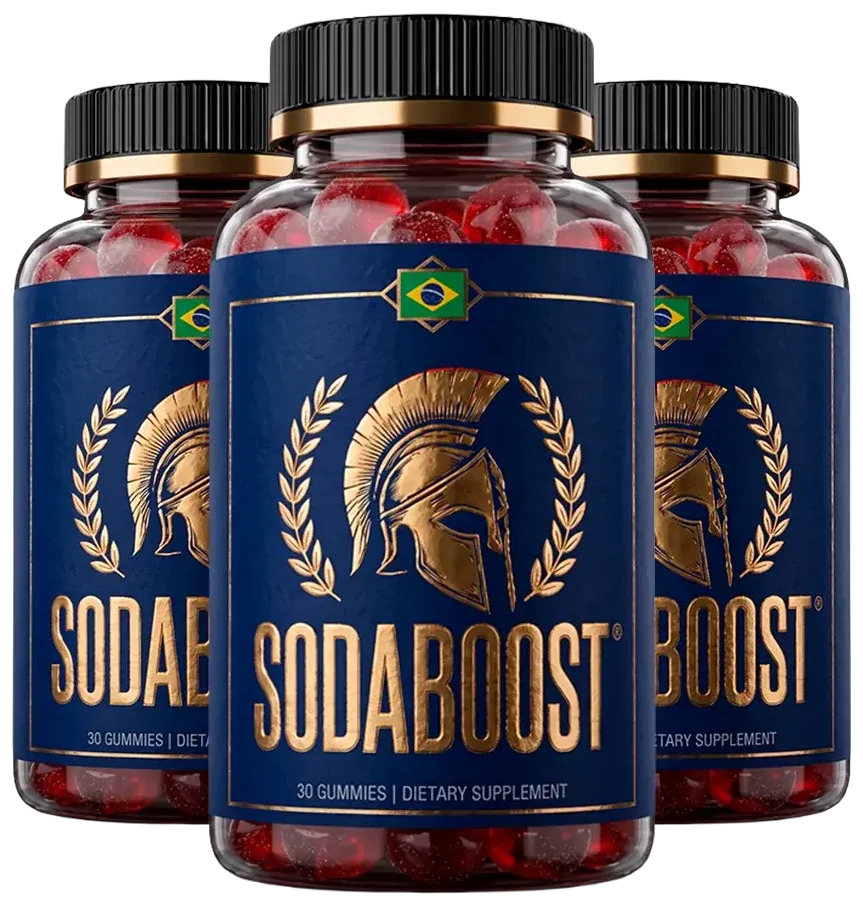
The label gives two quality lines: Produced in a GMP Facility and Assembled in the USA. The pack also shows brand seals for an FDA-registered facility, foreign and domestic ingredients, and money back.
Beyond that, the public record is thin. A lot number, SB-26/SO-4038, and a certificate of analysis reference, SB-4038-26-SO, are on file. The certificate itself has not been published, and neither has the factory name.
This page explains what each seal means, what the rules require and which tests you can ask to see.
- 5seals on the pack
- 2quality lines on the label
- 0lab reports published
- 1printed amount: caffeine 5 mg
What does each seal on the SodaBoost pack mean?
Seals are graphics, not test results. Here is what each one refers to, in plain words. We describe them; we do not treat them as proof.
The label says “Produced in a GMP Facility.” That refers to the FDA's supplement manufacturing rules (21 CFR Part 111). No certificate number is published.
A brand seal about the factory, not the product. The FDA does not approve supplements.
The label says “Assembled in the USA.” The ingredient origins are not published; the label also shows a Brazilian flag.
A brand seal saying ingredients come from the US and abroad. The countries are not listed.
Refers to the 60-day satisfaction window at checkout. It is a purchase policy, not a promise of results.
What does Produced in a GMP Facility mean?
GMP stands for good manufacturing practice. In the U.S., the GMP rules for supplements are 21 CFR Part 111. They apply to every company that makes, packs, labels or holds a supplement.
The rules ask makers to set specifications for identity, purity, strength and composition. They require at least one identity test on each dietary ingredient. They also call for written batch records and a system for complaints.
The line on the label tells you the plant should follow those rules. It is not a certificate. No GMP certificate number or third-party audit has been published.
Is SodaBoost FDA approved?
No. SodaBoost is not FDA approved, and no supplement is. The FDA does not have the authority to approve dietary supplements before they are marketed (FDA, Q&A on Dietary Supplements). The maker is responsible for safety and for a truthful label.
The FDA-registered facility seal is about the factory. Registration is a listing with the agency. It is not an inspection grade and not an approval.
| Term | What it means | What it does not mean |
|---|---|---|
| FDA approved | Used for drugs that pass FDA review before sale | Does not apply to supplements, so it does not apply to SodaBoost |
| FDA-registered facility | The plant is listed with the FDA | Not an approval, rating or test result for the product |
| Produced in a GMP facility | The plant works under 21 CFR Part 111 rules | Not a lab report for your bottle; no certificate number is published |
| Assembled in the USA | Final assembly happened in the U.S. | Does not say where each ingredient was grown or extracted |
| Dietary supplement | Sold under food-style supplement rules | Not a medicine; cannot claim to treat or cure disease |
Assembled in the USA: what about the ingredients?
Assembled in the USA describes where the gummies were put together. It does not say where each herb was grown or extracted.
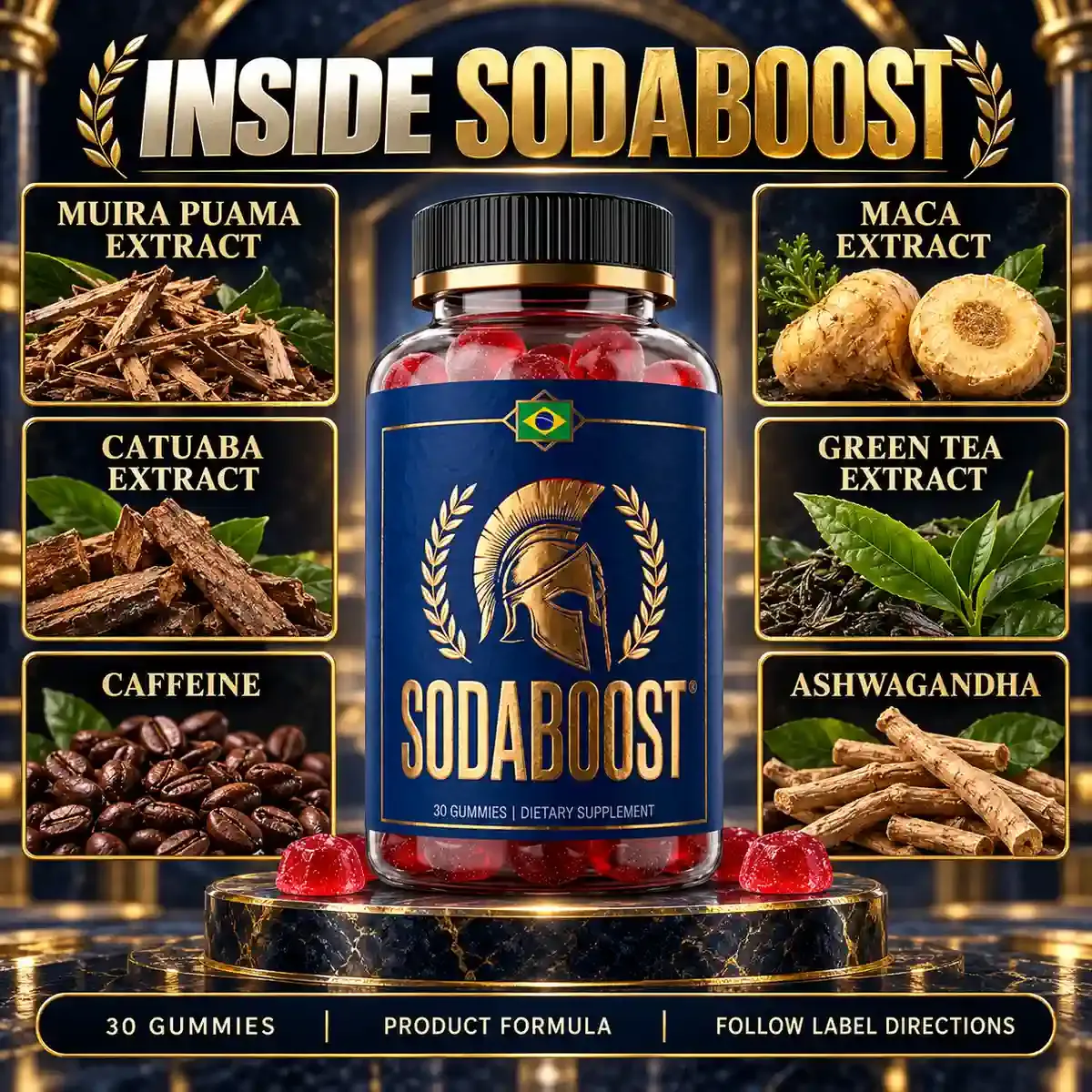
The front of the bottle shows a Brazilian flag. Muira puama and catuaba are traditional Brazilian barks, and maca is an Andean root. A brand seal says ingredients are foreign and domestic.
The actual source countries are not published. The ingredients page covers each plant and what the research says.
Which lab tests can buyers ask for?
A certificate of analysis usually lists results for one batch. These five tests matter most for a multi-herb men's gummy. If a report exists for your lot, these are the lines to look for.
| Test | What it checks | Why it matters for SodaBoost |
|---|---|---|
| Identity | That each herb is the plant named on the label | Nine ingredients share 82 mg; a mix-up would be hard to spot by eye |
| Caffeine content | The amount of caffeine per gummy | The label prints 5 mg; a test confirms the one number you can check |
| Heavy metals | Lead, arsenic, cadmium and mercury | Plant roots and barks can pick up metals from soil |
| Microbial | Yeast, mold and harmful bacteria | Gummies hold water and sugar, which can support growth if poorly made |
| Hidden drugs | Sildenafil, tadalafil and similar drugs | The FDA has found them in many men's products sold as supplements |
The hidden-drug line deserves extra weight. The FDA keeps a long list of men's products with hidden sildenafil or tadalafil (FDA, sexual enhancement notifications), and horny goat weed products have been caught up in it (OPSS, Horny Goat Weed). The side effects page explains why that matters for men on nitrates.
How do you ask for a lab report?
- 01
Find your lot number
It is printed on the bottle base. Our batch verify page shows where.
- 02
Call the order desk
Call +1 (302) 200-3480. Give your order ID, your lot number and the CoA reference SB-4038-26-SO.
- 03
Ask for specific tests
Ask whether the report covers identity, caffeine content, heavy metals, microbes and hidden drugs.
- 04
Ask who ran the tests
An in-house lab and an independent lab are both possible. Ask which one, and the date of testing.
- 05
Keep what you get
Save any report you receive. Compare the lot number on it with the one on your bottle.
What is not published about SodaBoost?
Being clear about gaps is part of quality. These facts were not in any public source we could read when this page was checked.
Not published as of this check
- The name and location of the factory
- The certificate of analysis for SB-4038-26-SO
- A GMP certificate number or audit report
- Results for heavy metals, microbes or hidden drugs
- The amount of each ingredient except caffeine (5 mg)
- The country of origin for each ingredient
- Any independent testing seal on the label
Why does an 82 mg proprietary blend make testing harder?
A proprietary blend lists one total weight for several ingredients. Rules require only that total and the order by weight (21 CFR 101.36). SodaBoost lists 82 mg for nine ingredients and prints only caffeine at 5 mg.
That makes outside checks harder. A lab can confirm a herb is present. It cannot compare the result with a printed amount, because there is none.
Label order still sets ceilings. Muira puama is 77 mg at most, and the last four ingredients are 5 mg or less each. Our post on reading an 82 mg proprietary blend walks through the math.
Balanced view on quality
What the label does well
- Full Supplement Facts printed on the label
- Caffeine amount printed: 5 mg
- GMP and assembly lines on the label
- Lot number on every bottle base
- Seal under the cap with a clear do-not-use warning
What is still missing
- No lab report published for the lot on file
- Factory and ingredient origins not named
- Eight of nine ingredient amounts hidden in the blend
- No independent testing seal
- FDA-registered seal can be misread as approval
SodaBoost testing and quality FAQ: questions people ask
Is SodaBoost FDA approved?
No. The FDA does not have the authority to approve dietary supplements before they are sold. The FDA-registered seal on the pack refers to a facility, not to SodaBoost itself.
Is SodaBoost third-party tested?
No third-party test report has been published, and no independent testing seal appears on the label. A certificate of analysis reference exists, but the report itself is not public.
What does produced in a GMP facility mean?
It means the product was made in a plant that follows good manufacturing practice rules. For supplements in the U.S., those rules are 21 CFR Part 111, which cover identity checks, batch records and complaints.
What does FDA-registered facility mean on a supplement?
It means the factory is listed with the FDA. Registration is a listing, not an inspection result or an approval of any product made there.
Where is SodaBoost made?
The label says Assembled in the USA. The factory name and the countries the ingredients come from are not published. The label also shows a Brazilian flag.
Has SodaBoost been tested for heavy metals?
No heavy-metal results have been published. You can ask the order desk whether the lab report for your lot covers lead, arsenic, cadmium and mercury.
How do I know a men's supplement has no hidden drugs?
Only a lab test can show that. The FDA has found sildenafil and tadalafil hidden in many sexual-enhancement products, so ask whether the lot was screened for them.
Can I get the certificate of analysis for SodaBoost?
You can ask. The reference number is SB-4038-26-SO, tied to lot SB-26/SO-4038, but no certificate has been published. Call +1 (302) 200-3480 and quote both numbers.
Are SodaBoost ingredients from Brazil?
The origins are not published. Muira puama and catuaba are traditional Brazilian plants and maca is an Andean root, but that does not tell you where this batch came from.
Ready to try SodaBoost?
1 gummy a day, 30 per bottle, from $49 a bottle with free US shipping on 3 or 6 bottles and a 60-day satisfaction window. Questions first? Call +1 (302) 200-3480.