
Men’s Gummies vs Capsules: A SodaBoost Comparison
Quick answerGummies are easier to take every day but carry sugar and fit less active ingredient. Capsules hold more per dose with no sugar, but are easier to forget. One SodaBoost gummy has 3 g of added sugar, 6% of the 50 g Daily Value, and an 82 mg blend, far less than one standard capsule can hold.
- 60-day satisfaction window
- Free US shipping on 3 or 6 bottles
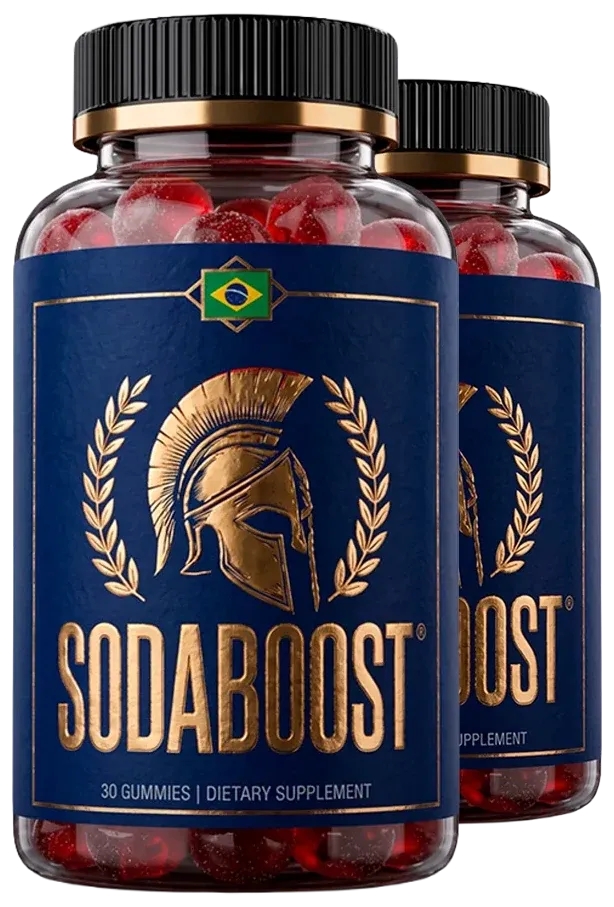
Gummies or capsules: which is better for men's supplements?
Gummies win on ease. Capsules win on dose size and sugar. Neither shape makes an ingredient work better by itself; the amount inside matters more.
SodaBoost is a gummy, so it has the gummy trade-offs. It is easy to keep up with, has 3 g of added sugar and holds an 82 mg blend. The rest of this post looks at each point.
- 3 gadded sugar per gummy
- 6%of the 50 g Daily Value
- 82 mgblend in each gummy
- 0glasses of water needed
How much sugar do gummy supplements add?
Most gummies use sugar or syrup to taste good and hold their shape. A capsule needs neither, so it usually has no sugar at all.
The SodaBoost numbers
Each SodaBoost gummy has 10 calories, 3 g of total carbohydrate and 3 g of total sugar, all of it added. The FDA Daily Value for added sugar is 50 g on a 2,000-calorie diet (FDA, added sugars). So one gummy uses 6% of it.
Over a month
One gummy a day for 30 days adds 90 g of sugar. A level teaspoon of table sugar is about 4 g, so each gummy is a bit less than one teaspoon. That is small next to a soda, but it is not zero.
Counting carbs
If you manage diabetes or count carbs closely, add 3 g of carbohydrate for each gummy and ask your care team before you start.
Why do gummies hold smaller doses than capsules?
A gummy is mostly sugar, pectin and water. That leaves little room for the active part. Strong-tasting herbs also limit how much a maker can add before the gummy tastes bitter.
That is why the SodaBoost blend is 82 mg in total. Its maca can be at most 38.5 mg, while trials used 1,500 to 3,000 mg a day (Gonzales et al., 2002). Its L-arginine is 5 mg or less, against 1,500 to 5,000 mg in studies (Rhim et al., 2019).
A capsule can hold several hundred milligrams in one piece. So capsules are the usual choice when a product aims to match research doses. Our post on reading an 82 mg proprietary blend works out every ceiling.
- Muira Puama up to 77 mg
- Maca up to 38.5 mg
- Catuaba up to 25.7 mg
- Green Tea up to 19.3 mg
- Caffeine 5 mg
- Ashwagandha ≤ 5 mg
- L-Arginine ≤ 5 mg
- Tribulus Terrestris ≤ 5 mg
- Horny Goat Weed ≤ 5 mg
Prefer chewing to swallowing? Try SodaBoost
One gummy a day, no water needed, 3 g added sugar and 5 mg caffeine. From $49 a bottle with a 60-day satisfaction window.
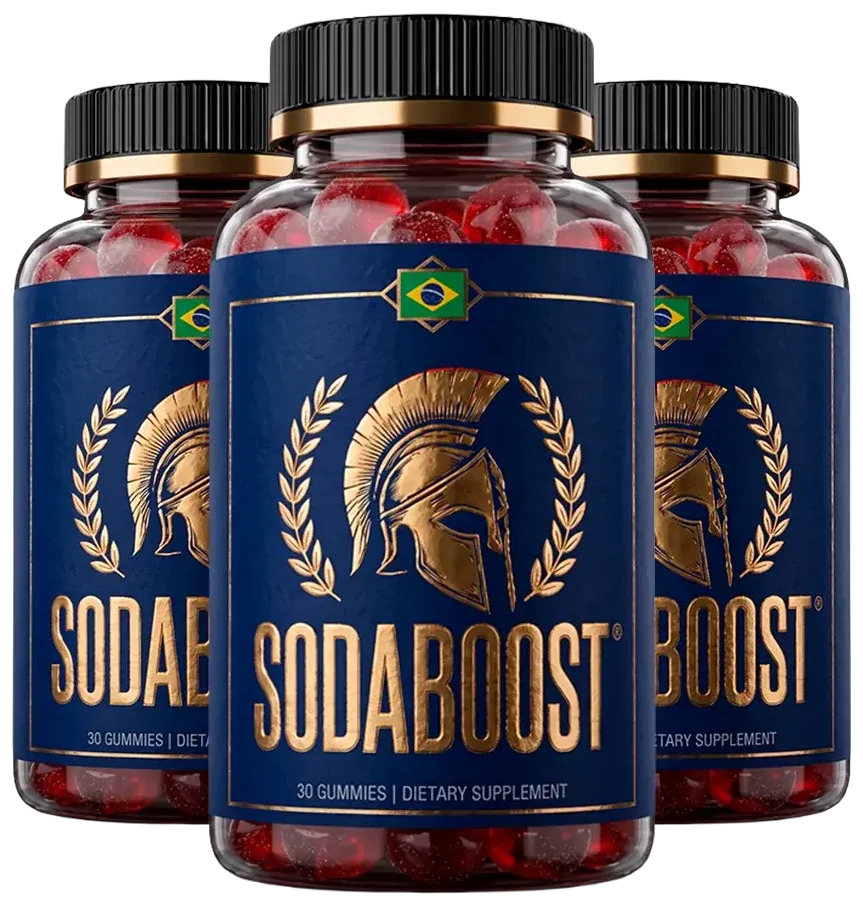
What else is in a SodaBoost gummy besides the blend?
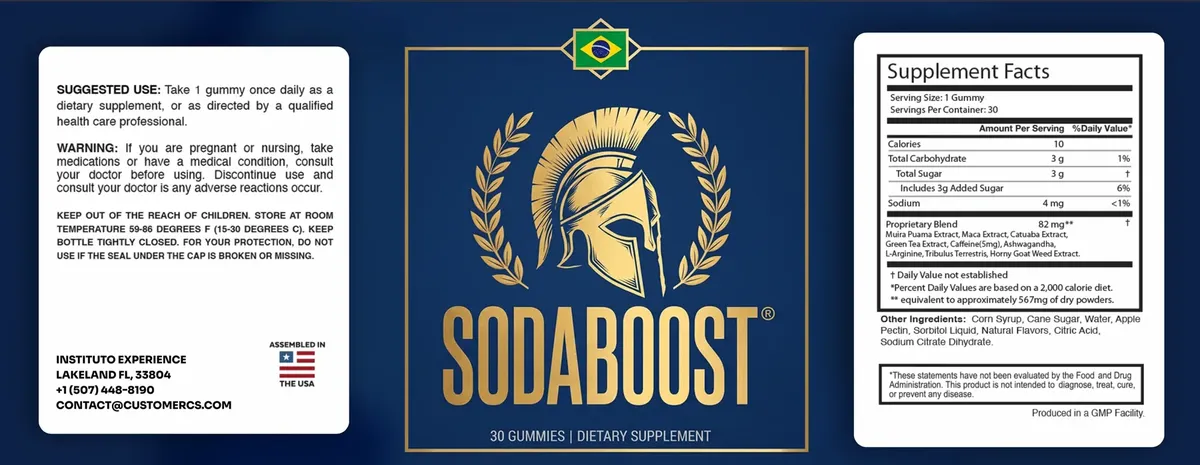
The "other ingredients" line tells you what makes the gummy a gummy. For SodaBoost, it reads: corn syrup, cane sugar, water, apple pectin, sorbitol liquid, natural flavors, citric acid and sodium citrate dihydrate.
Pectin, not gelatin
Apple pectin sets the gummy. It comes from fruit, not animal gelatin. The label does not make a vegan claim, so check with the seller if that matters to you.
Sorbitol
Sorbitol is a sugar alcohol. In large amounts it can loosen stools in some people, though one gummy a day is a small serving.
Are gummies easier to take every day?
A supplement plan only helps if you keep it. Many men buy capsules and then forget them in a drawer. A gummy that tastes good is easier to remember.
There is also no water needed. You can chew one in the car, at the desk or in the gym locker. The how to use page has ideas for where to keep the bottle.
How do gummies, capsules and SodaBoost compare?
| Gummies | Capsules | SodaBoost | |
|---|---|---|---|
| Sugar | Often a few grams a piece | Usually none | 3 g added |
| Room for actives | Small | Larger | 82 mg blend |
| Water needed | No | Yes | No |
| Taste | Sweet, flavored | Neutral | Natural flavors |
| Daily habit | Easier for many | Easier to forget | 1 gummy a day |
| Storage | Follow the label | Follow the label | 59-86°F, bottle closed |
| Good for | Small doses, pill-averse men | Larger studied doses | A light daily extra |
Who should choose a gummy and who a capsule?
Pick the format that matches your goal and your body. A few questions sort most people.
- 01
Do you hate swallowing pills?
A gummy removes that barrier. You chew it like a snack.
- 02
Do you want doses that match studies?
Capsules or powders usually fit far more active ingredient per serving.
- 03
Are you counting sugar or carbs?
A capsule avoids the sugar. If you choose a gummy, count each one.
- 04
Do you forget daily pills?
A gummy you like the taste of is easier to remember.
- 05
Do you travel a lot?
Either works. Keep a gummy bottle closed and out of a hot car, as the storage line asks.
What should you check on a gummy supplement label?
Gummy labels follow the same rules as capsule labels. A few lines matter more for gummies, because of the sugar and the small dose. Read these before you buy any brand.
Six lines to read on any gummy
- Added sugar in grams and % Daily Value, under the calories line.
- Serving size: one gummy or two? Two doubles the sugar.
- Each active ingredient with its own amount, or one blend total.
- Any caffeine figure, so you can add it to your daily count.
- Sugar alcohols such as sorbitol in the other ingredients.
- Storage temperature and a seal under the cap.
On SodaBoost, all six are printed. The serving is one gummy, the sugar is 3 g, the blend is 82 mg with caffeine at 5 mg, sorbitol is listed, and the label asks for 59-86°F with an intact seal. Only the eight blend amounts besides caffeine are missing. See the Supplement Facts page for the full panel.
How do you make a daily gummy habit stick?
If you go with a gummy, make the habit automatic. Tie it to something you already do each morning.
Each gummy also has 5 mg of caffeine. Our post on how much caffeine is in SodaBoost shows how it adds up with coffee. The caffeine page has the label details.
Gummies vs capsules FAQ
Are gummies as effective as capsules?
It depends on the dose, not the shape. Gummies usually hold less active ingredient per piece, so match the amount on the label with the dose used in studies.
Do gummy vitamins have a lot of sugar?
Many do. Most use sugar or syrup for taste and texture; SodaBoost has 3 g of added sugar a gummy, 6% of the Daily Value.
Are gummies bad for your teeth?
Sticky, sugary foods can cling to teeth. Chewing a gummy with a meal and drinking water after can help.
Why do some men prefer gummies to pills?
They are easy to chew, need no water and can feel like a small treat. That makes a daily habit easier to keep.
Can diabetics take gummy supplements?
Many can with planning, but the sugar counts. Each SodaBoost gummy adds 3 g of carbohydrate; check with your care team first.
Do capsules absorb better than gummies?
There is no general rule. Absorption depends on the ingredient and the formula more than on whether it is chewed or swallowed.
How much sugar is in SodaBoost?
Each gummy has 3 g of total sugar, all added, with 10 calories. A month of daily use adds 90 g of sugar.
Why do gummies have smaller doses?
A gummy is mostly sugar, pectin and water, which leaves little room for actives. Some herbs also taste bitter in large amounts.
Does SodaBoost come in capsule form?
Not that we know of. SodaBoost is sold as a 30-gummy bottle, one gummy a day.
How much sugar is in one SodaBoost gummy?
One SodaBoost gummy has 3 g of added sugar, which is 6% of the 50 g Daily Value. The gummy also carries an 82 mg blend and 5 mg of caffeine.
Why do Soda Boost gummies hold less per dose than capsules?
A gummy has to fit the active ingredients inside a chewable base with sugar, so the blend is small at 82 mg. A standard capsule can hold much more per dose without added sugar.
Which is easier to stick with, gummies or capsules?
Gummies are easier to take every day, which helps with routine. Capsules hold more per dose but are easier to forget.